



Every healthcare provider knows the frustration of claim denials. You provide excellent patient care, submit your claims on time, and then receive a rejection notice. The reality is shocking: nearly one in five medical claims gets denied, costing practices thousands of dollars in lost revenue each year.
Understanding the top denials in medical billing is not just about fixing problems after they happen. It is about protecting your revenue, improving your cash flow, and ensuring your practice thrives. This comprehensive guide breaks down the ten most common claim denials and provides actionable solutions to prevent them from draining your practice’s financial health.
Understanding Claim Denials in Medical Billing
Before diving into specific denial types, let’s clarify an important distinction. A claim rejection occurs before processing due to technical errors like incorrect patient information. A claim denial happens after the insurance company processes your claim but refuses payment. Both impact your revenue cycle management, but denials typically require more complex resolution strategies.
Healthcare denial management has become increasingly critical as insurance companies tighten their policies. Approximately 90% of denials are preventable with proper procedures, making it essential for practices to identify and address common denial patterns.
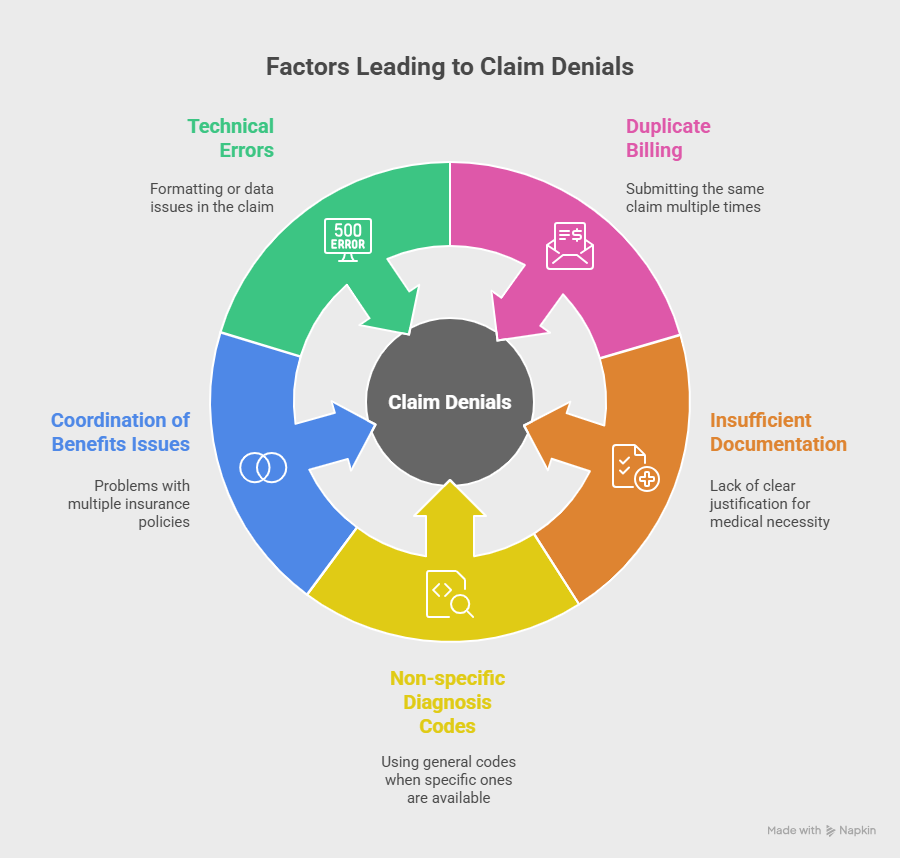
The Top 10 Denials Costing Your Practice Money
1. Missing or Inaccurate Patient Information
One of the most frustrating denials happens when basic patient data contains errors. A simple typo in the patient’s name, incorrect date of birth, wrong insurance policy number, or outdated coverage information can trigger an immediate denial.
Insurance verification should happen at every patient visit, not just the first appointment. Coverage changes frequently, and patients often forget to inform your front desk about updates. Implementing automated eligibility verification tools can catch these errors before claims submission.
Prevention strategies include training front desk staff on thorough data collection, using electronic verification systems that connect directly to payer databases, and confirming patient identity with photo identification at each visit.
2. Lack of Prior Authorization
Many insurance plans require prior authorization before performing specific procedures or services. When your practice fails to obtain this approval, the claim gets denied regardless of medical necessity.
Prior authorization requirements vary widely between payers and continue to expand each year. Services commonly requiring authorization include advanced imaging, specialty referrals, durable medical equipment, and certain surgical procedures.
Maintaining an updated authorization requirement list for each payer is essential. Consider designating a team member specifically responsible for tracking and obtaining prior authorizations. Many medical billing services now offer specialized authorization support to reduce this burden.
3. Incorrect or Outdated Coding
Medical coding errors represent a significant source of claim denials. Using incorrect CPT codes, outdated ICD-10 diagnosis codes, or failing to use proper modifiers creates mismatches that payers immediately flag.
The coding landscape constantly evolves with hundreds of new codes added annually. Healthcare providers must stay current with coding updates or risk consistent denials. Common coding mistakes include upcoding, undercoding, unbundling procedures that should be billed together, and selecting diagnosis codes that lack specificity.
Investing in ongoing coder education, utilizing current coding resources, and implementing regular coding audits dramatically reduces these errors. Professional medical billing services in Florida employ certified coders who stay updated on all coding changes.
4. Services Not Covered by Patient’s Plan
Not all insurance plans cover every service you provide. Submitting claims for non-covered services results in immediate denial. These denials are particularly frustrating because the service was legitimate and medically appropriate, but simply falls outside the patient’s specific coverage.
Benefit verification should happen before performing non-emergency services. Understanding what each patient’s plan covers protects both your practice and the patient from unexpected bills. When services fall outside coverage, inform patients beforehand and obtain signed financial responsibility agreements.
Creating coverage checklists for common procedures helps staff quickly identify potential issues. Many medical billing companies in Florida provide comprehensive benefit verification as part of their service packages.
5. Timely Filing Deadline Missed
Every insurance company establishes specific deadlines for claim submission. Missing these timely filing limits results in automatic denial, even if the claim is otherwise perfect. Most payers require submission within 90 to 365 days from the date of service.
Medicare reduced its filing window from up to 27 months down to 12 calendar months. Commercial payers maintain their own timelines, making it crucial to track each payer’s specific requirements.
Establishing systematic claim submission processes prevents timely filing denials. Submit clean claims within days of service, track pending claims weekly, and address any issues immediately. Automated practice management systems can flag approaching deadlines before they expire.
6. Duplicate Billing Errors
Submitting the same claim twice creates duplicate billing denials. This often happens due to human error, system glitches, or confusion about claim status. While some duplicates result from intentional resubmission attempts, most are accidental.
Payer systems automatically flag claims with matching patient information, dates of service, procedure codes, and billed amounts. Even legitimate claims get denied when they appear duplicated.
Implementing robust claim tracking systems prevents duplicate submissions. Before resubmitting any claim, verify its current status through payer portals. Train staff on proper resubmission procedures, including when to file corrected claims versus appeals.
7. Insufficient Documentation for Medical Necessity
Insurance companies regularly deny claims when documentation fails to demonstrate medical necessity. The service may have been entirely appropriate, but if your documentation does not clearly justify why the patient needed that specific treatment, the payer will not reimburse.
Medical necessity denials are particularly challenging because they require provider involvement to resolve. Comprehensive documentation must support every service billed. Include clear connections between diagnoses and treatments, document symptom progression, and explain why specific interventions were chosen.
Provider education on documentation standards is critical. Many practices benefit from regular documentation audits to identify weaknesses before they result in denials. Working with experienced medical billing companies in Florida provides access to documentation specialists who understand payer requirements.
8. Non-specific Diagnosis Codes
ICD-10 coding requires maximum specificity. Using general or unspecified diagnosis codes when more specific codes exist triggers denials. Insurance companies expect providers to code to the highest level of detail available in the medical record.
For example, coding for “unspecified diabetes” when the chart clearly documents “Type 2 diabetes with diabetic neuropathy” will likely result in denial. The coding system includes laterality, meaning you must specify right or left side when relevant.
Clinical documentation improvement initiatives help providers create records that support specific coding. Regular communication between providers and coders ensures diagnosis codes accurately reflect clinical findings.
9. Coordination of Benefits Issues
When patients have multiple insurance policies, coordination of benefits determines which plan pays primary versus secondary. Filing claims in the wrong order or failing to indicate other coverage causes denials.
Always verify insurance coverage completely, identifying all active policies and their payment hierarchy. File claims with the primary payer first, wait for processing, then submit to secondary payers with primary remittance details.
Coordination of benefits becomes particularly complex with Medicare, Medicaid, and commercial insurance combinations. Specialized revenue cycle management expertise helps navigate these intricate scenarios.
10. Claim Contains Technical Errors
Technical claim errors include formatting problems, missing required fields, invalid codes, or data that fails clearinghouse edits. While these seem simple to fix, they cause significant delays and require resubmission.
Common technical errors involve incorrect place of service codes, missing or invalid taxonomy codes, NPI number mistakes, and billing provider information that does not match payer records.
Utilizing robust claim scrubbing software before submission catches most technical errors. Clearinghouses provide real-time feedback on claim validity, allowing correction before payer rejection. Regular system updates ensure your practice management software aligns with current payer requirements.
Proven Strategies to Reduce Claim Denials
Preventing denials requires a comprehensive approach addressing people, processes, and technology. Start by establishing a denial management team responsible for tracking denial patterns, identifying root causes, and implementing corrective actions.
Regular staff training keeps everyone updated on payer requirements, coding changes, and documentation standards. Create denial prevention checklists for each stage of the billing process from patient registration through claim submission.
Technology plays a crucial role in denial prevention. Modern practice management systems with integrated clearinghouses catch errors before submission. Automated eligibility verification tools confirm coverage in real-time. Predictive analytics identify claims at high risk for denial before they are filed.
Many practices find that partnering with professional billing specialists dramatically reduces denials while freeing staff to focus on patient care. Expert medical billing services bring specialized knowledge, dedicated resources, and proven denial prevention systems.
The Financial Impact of Unmanaged Denials
The cost of claim denials extends far beyond the denied amount. Each denied claim requires staff time to research the issue, gather documentation, make appeals, and resubmit. Studies show the average cost to rework a denied claim ranges from $25 to $117 per claim.
Beyond direct costs, denials create cash flow disruptions that strain practice operations. Delayed payments affect your ability to meet payroll, purchase supplies, and invest in practice growth. Patient satisfaction suffers when billing issues create confusion and unexpected bills.
Most concerning, many denied claims are never appealed or resubmitted. Practices simply write off this revenue, accepting preventable losses that accumulate over time. Industry data suggests practices fail to appeal up to 65% of denials, leaving significant money on the table.
How Professional Medical Billing Services Help
Outsourcing to experienced medical billing specialists provides immediate access to denial prevention expertise. Professional billers maintain current knowledge of payer requirements, coding updates, and documentation standards across multiple specialties.
Dedicated billing teams implement systematic denial tracking and prevention programs that individual practices struggle to maintain. They leverage advanced technology including automated eligibility verification, real-time claim scrubbing, and sophisticated denial analytics.
The financial benefits often exceed the service cost. Practices working with professional billers typically see denial rates drop below 5%, compared to industry averages around 15 to 20%. Faster claim processing improves cash flow, while reduced denials increase net collections.
Frequently Asked Questions About Medical Billing Denials
What is the difference between a claim rejection and a claim denial?
A claim rejection occurs before the insurance company processes your claim, usually due to technical errors like incorrect patient information or formatting issues. Rejections never enter the payer’s adjudication system. A claim denial happens after the payer reviews and processes your claim but decides not to pay. Denials are more complex to resolve and often require appeals with supporting documentation.
How long do I have to appeal a denied claim?
Appeal timeframes vary by insurance company, typically ranging from 30 to 180 days from the denial date. Medicare allows 120 days for the first level of appeal. Always check the denial explanation for specific deadlines, as missing the appeal window forfeits your right to challenge the decision. Many practices benefit from professional support to manage appeal deadlines effectively.
Can all claim denials be prevented?
While approximately 90% of claim denials are preventable with proper procedures, some denials are unavoidable. Changes in patient coverage, legitimate non-covered services, and payer policy shifts can result in denials despite perfect processes. The goal is minimizing preventable denials through robust verification, accurate coding, complete documentation, and timely filing. Continuous improvement in denial management reduces denial rates significantly over time.
Take Control of Your Practice’s Financial Health Today
Understanding the top 10 denials in medical billing empowers you to protect your practice’s revenue. Each denied claim represents money your practice earned but may never collect. By implementing systematic denial prevention strategies, you can dramatically reduce write-offs and improve cash flow.
Whether you choose to enhance internal processes or partner with professional billing specialists, taking action on denial management delivers immediate financial benefits. Your focus should remain on excellent patient care while ensuring your practice receives proper compensation for services rendered.
Ready to reduce denials and boost your practice revenue? ACP Billing Services specializes in comprehensive revenue cycle management with proven denial prevention strategies. Our team of certified coders and billing experts helps Florida practices maximize collections while minimizing administrative burden. Contact us today for a free practice assessment and discover how we can transform your billing operations.
Related Posts

How To Resolve Most Common Denials In Medical Billing | ACP Billing
Every healthcare provider knows the frustration: you deliver quality care, submit a claim, and then—denied.…

CPT vs ICD Codes: Key Differences Explained
If you’ve ever wondered why your medical bills look like an alphabet soup of numbers…

Medical Billing Denial Codes: Complete Guide to Reasons & Solutions
Getting claim denials can feel like hitting a brick wall when you’re trying to keep…

Medical Billing Outsourcing: Complete Pros & Cons Guide
Introduction: Are you struggling to keep up with the complexities of medical billing while trying…